

MONOPON is a purely mineral plant substrate for all plants that require a particularly well-aerated and consistently stable root environment. Its composition of 100% natural volcanic Pumice creates optimal drainage conditions and ensures that excess water can drain away reliably. This prevents waterlogging, one of the most common causes of root rot and yellow leaves in soil. MONOPON serves as a modern alternative to clay granulate and expanded clay and offers the same applications as other manufacturing processes. MONOPON can be used for complete planting as a substitute for potting soil, as a drainage layer, and as an additive to other substrates.
Thanks to its mineral composition, MONOPON stores water and releases it to the plant as needed. The substrate remains volume stable over time, does not compact, and improves soil aeration. This provides plants with a secure hold in the planter, even for larger specimens or deep-rooted species. Since MONOPON is not pre-fertilized, the nutrient supply can be individually tailored to the needs of each plant, or it can be ideally combined with pre-fertilized substrates.
Thanks to its purely mineral, peat-free formula, MONOPON provides no breeding ground for gnats and is therefore ideal for clean and hygienic plant cultivation both indoors and outdoors.
MONOPON is highly versatile: it can be used as a drainage layer in pots without their own self-watering system, as a soil conditioner to loosen soil, or as a pure plant substrate for plants that prefer a particularly airy root environment.






- Suitable for all plants
- Ideal as a drainage layer or for soil improvement
- Replaces potting soil, clay granulate, and expanded clay
- Not pre-fertilized
- Peat-free water reservoir
- High drainage capacity prevents waterlogging in the planter
- Structurally stable, does not compact
- Prevents gnats
- Recyclable
- Packaging consists of > 80% PCR recycled plastic
Product Details
- Purely mineral plant substrate
- Ingredients: Pumice
- Particle size: 2–5 mm
Compatible Accessories
To keep track of your plant’s water needs even in conventional flower pots, you can use the PON watering indicator. It reliably indicates when your plant needs to be watered in the mineral substrate.
DeclarationPlanting in LECHUZA planters
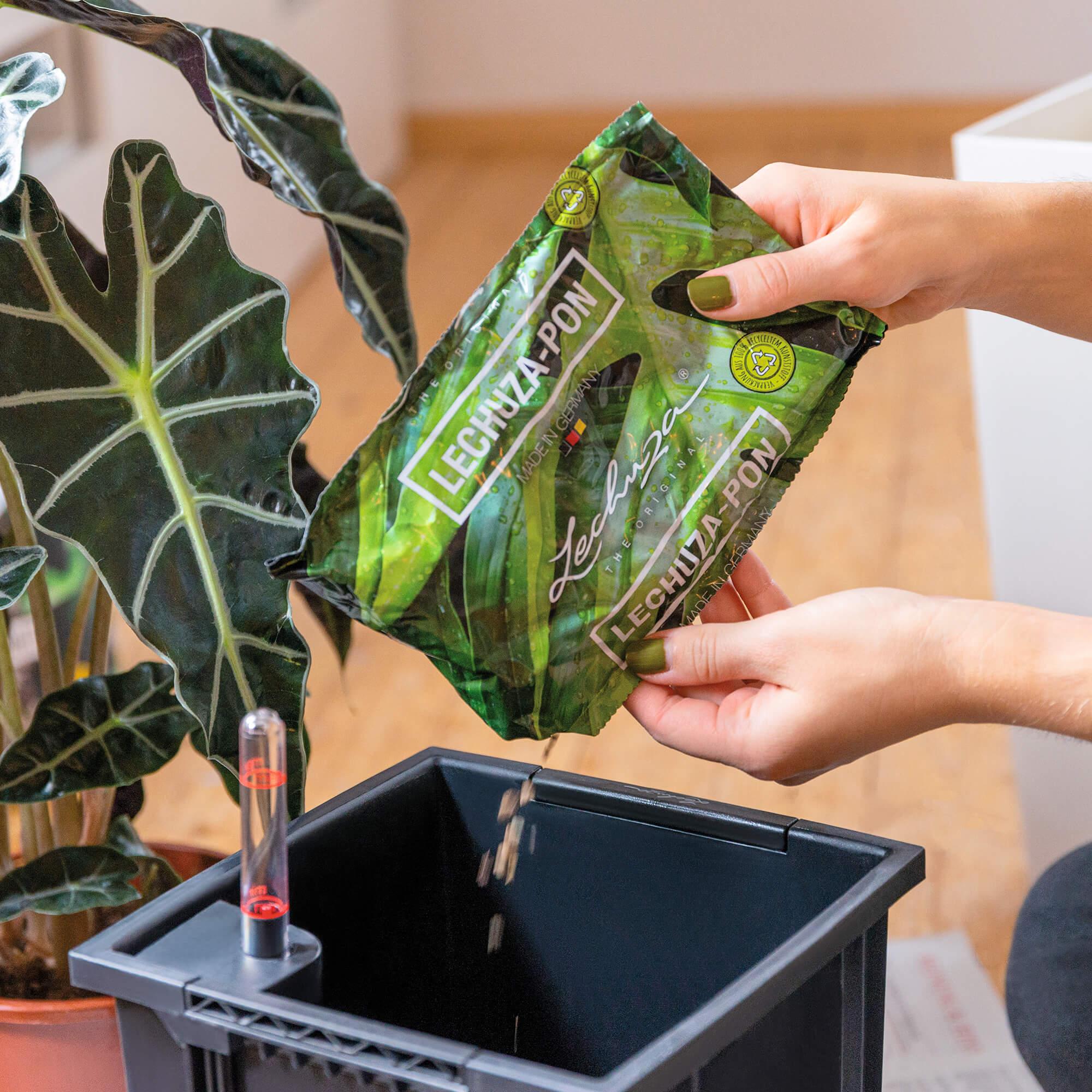
Step 1:
Place the irrigation layer—included with LECHUZA planters—on the divider in the planter. This is important to ensure that water is transported from the reservoir to the plant and to prevent waterlogging.
Then fill the planter with a thin layer of your chosen substrate, such as BASICPON—just enough so that your plant sits at the correct height in the planter.
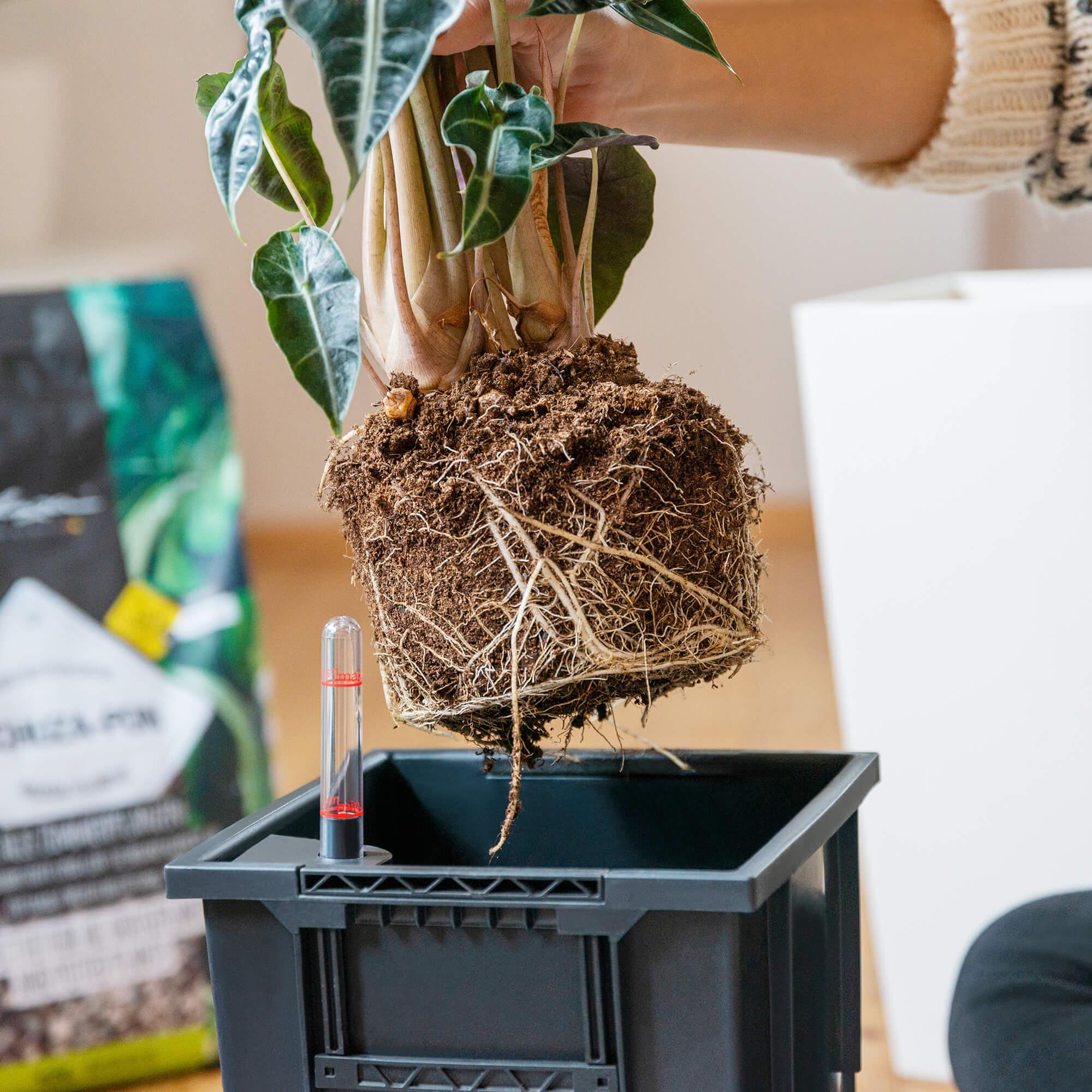
Step 2:
Place the plant in your planter as usual. You don’t need to completely remove the soil from the roots.
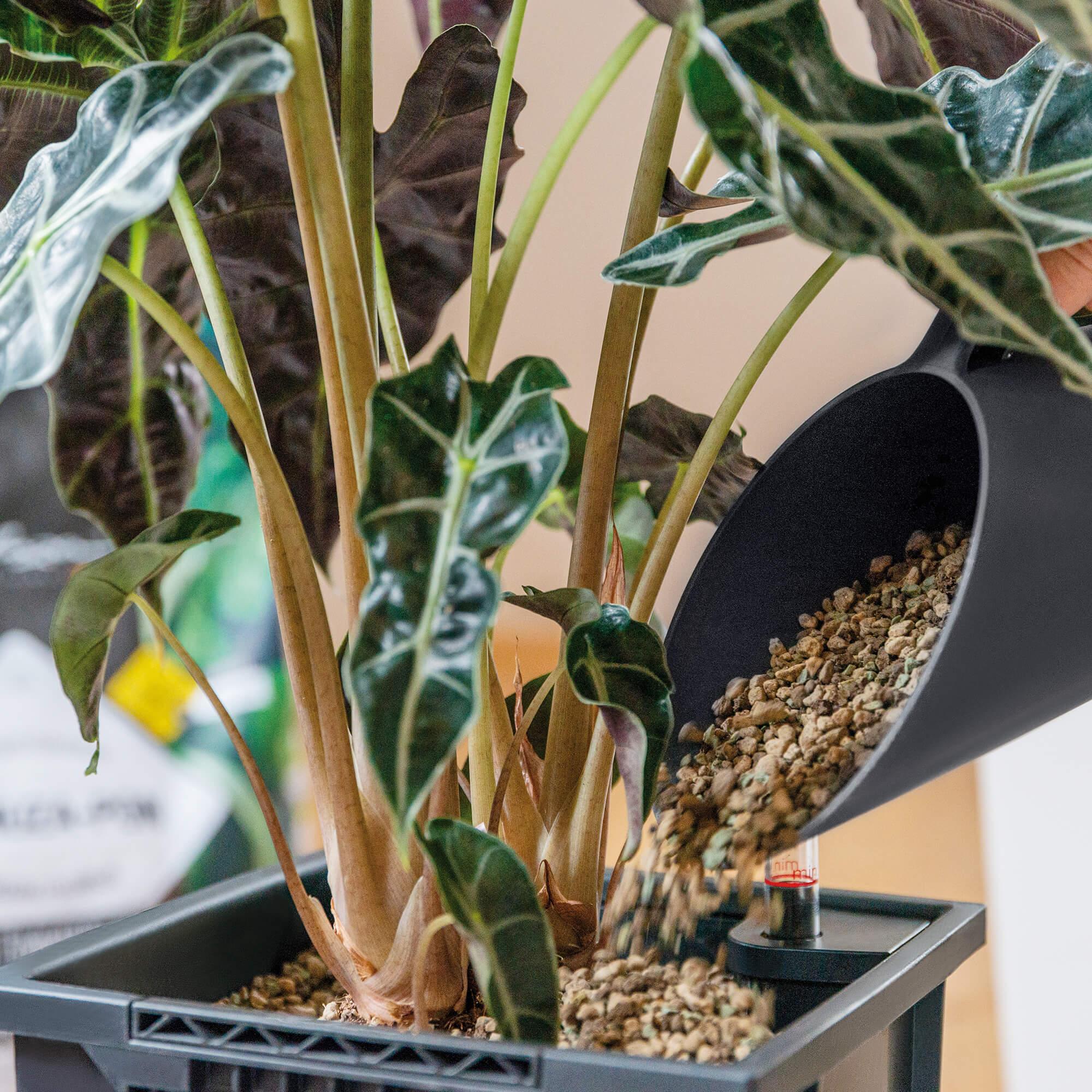
Step 3:
Now you can fill the planter completely with the substrate of your choice, for example, using the PON funnel.
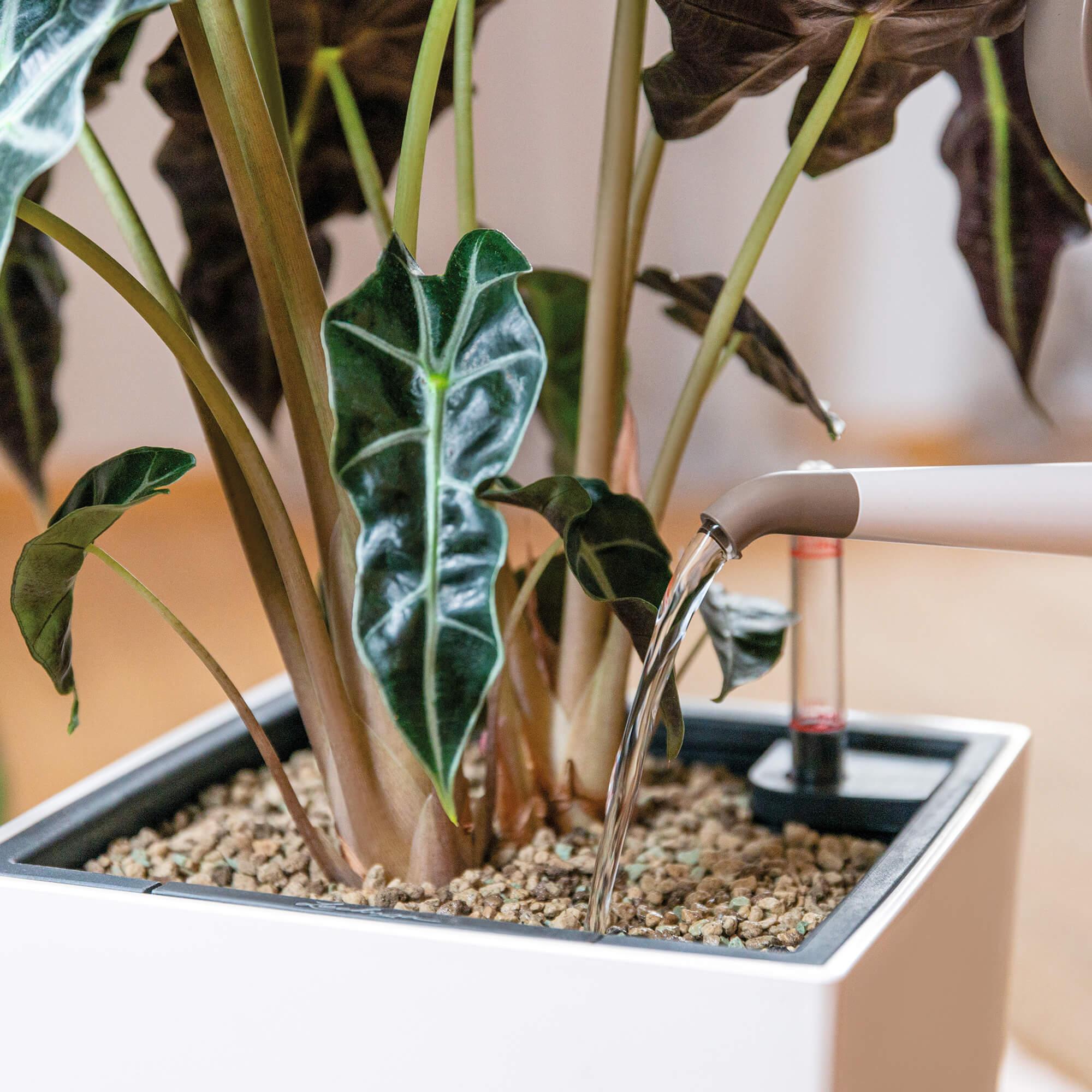
Step 4:
For the first 12 weeks, water your plant as usual from above, directly onto the substrate. Water only as much as the plant can absorb.
Make sure there is as little water as possible in the reservoir.
After this initial watering phase, you can water your plant through the water shaft. For planters without the LECHUZA irrigation system, continue to water the plant from above. You can find more information here.